


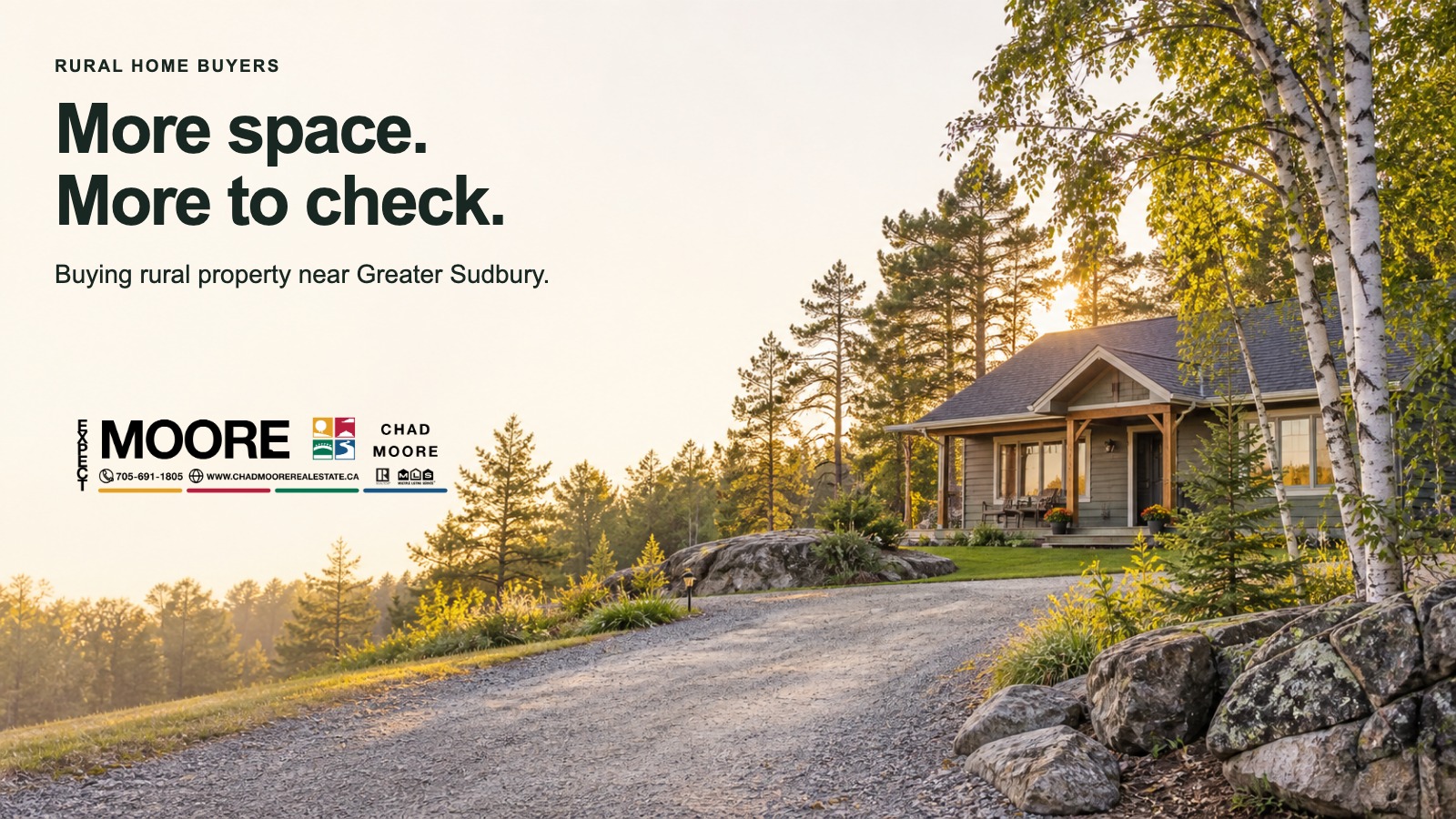
Space and privacy are compelling. When we look at a rural home near Greater Sudbury, I also want you to understand the systems and access you will be responsible for after closing—not just the acreage in the listing.
I use five questions to start. The answers are property-specific, so we ask for records and qualified checks before treating an attractive setting as a complete picture. This is part of market preparation, not a substitute for your inspector, lawyer, lender or the relevant public authority.
1. Where does the drinking water come from?
Ask whether the home uses a drilled or dug well, another private source, or a municipal connection. Request the well record if available, recent test results, pump information and any treatment history. Depth alone will not tell you whether the supply or quality meets your needs, so I would not use a regional “typical depth” as a shortcut. Public Health Sudbury & Districts explains private-water testing; arrange suitable testing and specialist advice for this property before removing a relevant condition.
2. What handles wastewater?
If there is an on-site sewage system, ask for the permit and installation records, maintenance history and the location of the components. Do not assume every system is simply a tank and leaching bed. Public Health Sudbury & Districts oversees local private sewage systems and permits. A qualified inspection can help you understand condition and limitations; my home-inspection guide explains the broader inspection process. If records are missing, treat that as a question to resolve rather than proof that the system is sound or unsound.
3. Does the land allow your plans?
Acreage on paper does not automatically mean you can add a dwelling, business, dock or outbuilding. Check the exact parcel, zoning, setbacks and any other applicable approvals with the City before relying on a future use. The City's zoning guidance and map are a starting point; the Land Use & Utilities Checker can help organize questions, not grant permission. If the lot is waterfront too, my waterfront guide adds shoreline-specific checks.
4. Who owns and maintains the way in?
Find out whether access is on a public road, a private road, a right-of-way or another arrangement. Ask your lawyer to verify the legal access on title and review any written maintenance or cost-sharing agreements. Do not assume the City plows a road or that neighbours have an informal agreement. Visit in conditions that reveal drainage and winter-access questions if you can, and ask who pays when a culvert or surface needs work.
5. Which services and ongoing costs fit your life?
Confirm the actual internet options at the address, hydro service, heating fuel and equipment ownership, insurance, waste collection, school transportation if relevant, and travel time to the places you use. A service shown on a coverage map may not be available or reliable at the house, so call the provider. Budget for driveway snow clearing, trees, drainage and the space you will maintain. A rural home can be a wonderful fit, but those details belong in the decision before the offer becomes firm.
If the property is vacant land rather than an existing home, read my vacant-land guide; financing, servicing and development questions are different. For current homes, use MLS® Smart Search or Curated Hot Sheets to build a shortlist, then follow the Buyer Experience to investigate the specific home. I would rather help you ask one more question now than discover a costly assumption after closing.
Expect Moore for Your Real Estate.
— Chad Moore, REALTOR® | Lake City Realty